
Colorado Elopement Videographer: What to Look For and Why It Changes Everything
There’s a moment that happens in almost every elopement film. It’s not the vows, although those matter. It’s the quiet one — the exhale after, the glance, the laugh that surprises both of them. Photos don’t catch it. You can’t plan it. But a good Colorado elopement videographer will be positioned for it before it happens, because they’ve seen it enough times to know it’s coming.
That’s what separates film from photography. And it’s why more couples eloping in Colorado are adding video to their day — not as an afterthought, but as the primary record of what actually happened.
This post is for couples trying to figure out what a Colorado elopement videographer actually does, what to look for when choosing one, and why the decision matters more than most people expect.
What does a Colorado elopement videographer actually do?
The short answer: they capture what a photographer can’t.
A photo catches a moment. Film catches the moment before it, the moment after it, and the sound underneath all of it. Your voices. The wind. The crunch of boot on granite. The way one of you laughs when you’re nervous.
A skilled Colorado elopement videographer isn’t just running a camera. They’re reading the day — anticipating movement, managing light, recording audio that will anchor the film emotionally when it’s edited. They’re thinking about how a 30-second scene in a mountain basin will feel in three years when you sit down to watch it together.
Most elopement films run between three and eight minutes. That’s the finished product — music, audio from the ceremony, and the footage woven together into something that holds the whole day in it. What gets captured in twelve hours gets distilled into something you’ll actually watch again.
Why is video important for a Colorado elopement?
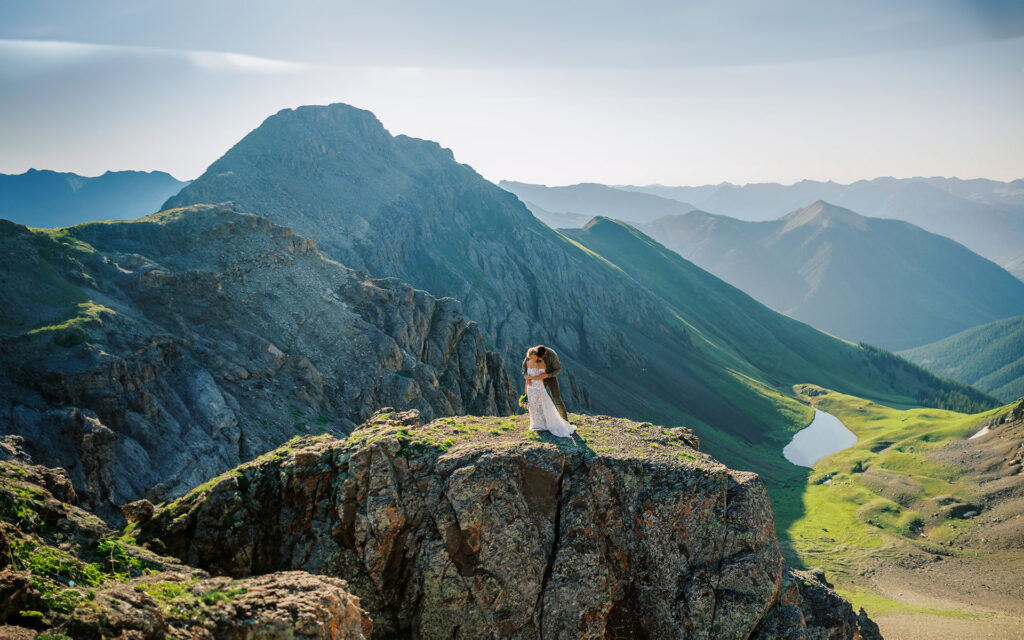
Colorado elopements are built around environments that move. The light shifts fast at altitude. A storm rolls in from the west and changes everything in twenty minutes. The wildflowers at Yankee Boy Basin look different at eight in the morning than they do at noon.
A still image holds one frame of that. Film holds the motion — the way clouds move over a ridge, the way the grass bends in the wind during vows, the way the San Juans look as you drive a dirt road into a basin nobody else is in that morning.
There’s also the audio. Couples consistently say it’s the part they didn’t expect to matter as much as it does. Hearing your partner’s voice saying your name. Hearing the silence of a place at 12,000 feet. Hearing yourself laugh. Years later, that audio is what pulls you back into the room — or the meadow, or the summit — in a way that a photo can’t replicate.
According to research from The Knot, couples who add video to their elopement are significantly more likely to say they wish they’d invested more in it — rarely the other way around.
What should you look for in a Colorado elopement videographer?
A portfolio that matches your environment
Colorado is not one thing. Rocky Mountain National Park is different from the San Juans. A Telluride elopement looks and feels different from a Breckenridge one. Look for a videographer who has shot in the specific type of environment you’re planning for — alpine above treeline, high desert, dense forest, Jeep roads — not just someone who has filmed in Colorado generically.
Watch their films with the sound on. The audio quality tells you more than the visuals. Bad on-location audio is impossible to fix in post.
Experience with the conditions
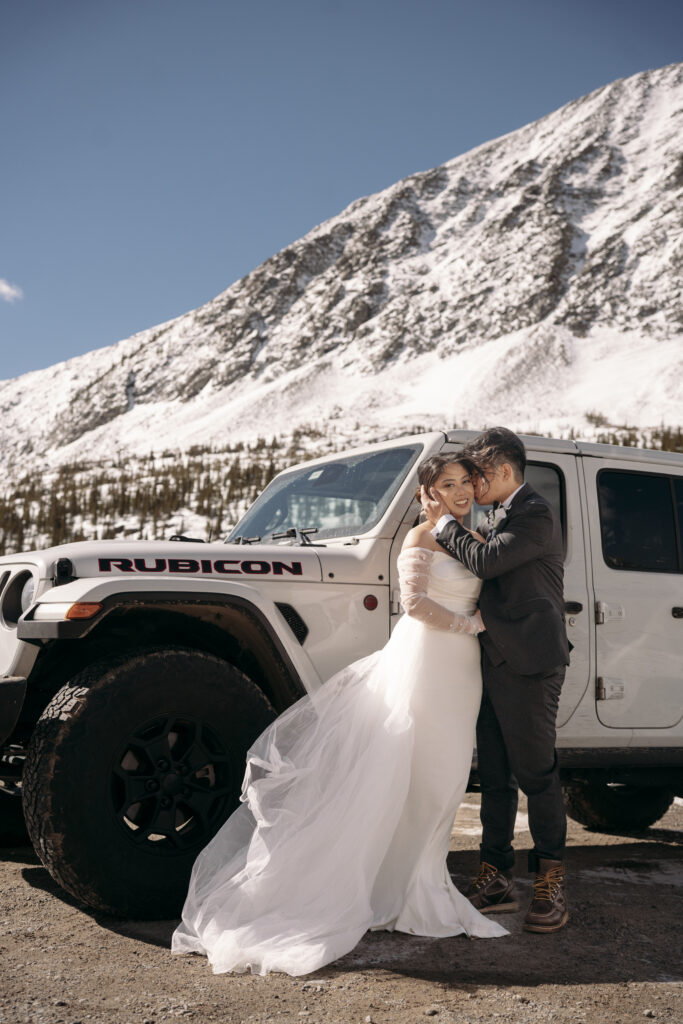
High-altitude filming is technically demanding. Light changes fast. Dust, wind, and cold affect equipment. A videographer who understands how to work at 12,000 feet — how to protect gear, manage battery life in cold, handle unexpected weather — is a different skill set from someone who shoots at lower elevations.
Ask specifically: have they shot on a 4WD pass? Have they worked above treeline in afternoon weather? Have they managed a shoot where a storm changed the timeline? The answers tell you whether they’ll stay calm when the day goes sideways — which, in Colorado, it sometimes does.
A genuine understanding of elopements
An elopement is not a wedding with fewer guests. The day is structured differently. The timeline is looser. There’s no reception, no program, no schedule to anchor things. A videographer who primarily shoots traditional weddings and occasionally does elopements will approach the day differently than one who specializes in them.
Look for someone who talks about the day the way you talk about it — as an experience, not an event. The Association of Elopement Photographers & Videographers maintains a directory of specialists if you’re building a shortlist from scratch.
Transparent packages and deliverables
Ask upfront: what’s the finished film length? How long is the turnaround? Do they include a drone reel if permitted? What’s their audio setup? Do they offer a longer documentary cut in addition to the highlight film? These aren’t unreasonable questions. A videographer worth hiring will answer all of them clearly.
For reference, the average elopement videography investment in Colorado ranges from $2,500 to $5,500 depending on coverage hours and deliverables. Drone footage, when permitted by the land management agency, is often available as an add-on and adds a dimension to mountain footage that’s hard to replicate otherwise.
How is eloping in Colorado different from other states for video?
Two things are specific to Colorado that affect videography planning: the permit landscape and the self-solemnization law.
Most national forest land in Colorado — White River, Arapaho, GMUG — doesn’t require a permit for small elopements. That means your videographer can film freely in locations that would require paperwork in other states. The USDA Forest Service permit page has current guidance by forest and activity type.
Colorado also allows self-solemnization — you marry yourselves, with no officiant required. For film, this matters. The vow exchange is entirely yours. No script, no officiant directing the moment. What gets said is what you actually wanted to say. The audio in the film is just the two of you. That tends to make for a better film.
What questions should you ask a Colorado elopement videographer before booking?
These are the ones that actually filter well:
Can I see a full film from an elopement similar to what we’re planning? Highlight reels are edited to impress. A full film shows you how they handle pacing, transitions, and quiet moments — not just the cinematic peaks.
How do you handle audio at altitude? Wind is the enemy of elopement audio. Ask what their mic setup is and whether they use backup recording. A lav mic on the couple plus a backup recorder is the standard approach for professionals working in exposed alpine environments.
What happens if weather forces a location change? This is Colorado. It will rain at some point. Know whether they have backup locations in mind and how flexible their timeline is.
Do you work with a photo and video team, or solo? Both are valid. A solo videographer moves quietly and stays out of the way, which some couples prefer. A team can cover more ground and angles simultaneously. Know which you’re getting.
What’s your approach to the day? The answer to this tells you whether they’ll be a presence you have to manage or someone who disappears into the background and lets the day happen.
Why adding video changes the way you remember the day
Most couples describe their elopement as going by faster than expected. The adrenaline of the moment compresses time. You’re present for it — and then it’s done, and the details start to blur in ways you didn’t anticipate.
Film holds the details. Not just the visual ones. The sound of a creek below you while you said your vows. The way the wind picked up right at the end. Your voice, their voice, the silence after.
Those are the things that disappear from memory first. And they’re exactly what a Colorado elopement videographer captures before they’re gone.
If you want to see what that looks like for mountain elopements, our elopement films are a good starting point. And when you’re ready to talk through what a film day could look like for yours, we’re easy to reach.

Be the first to comment